I met Anthony through mail correspondence around the pandemic. Due to an extended time at home I decided to start writing about music again after a few years’ absence and began just searching things labeled as “dungeon synth.” I ordered a tape from the record label Mystic Timbre. Mystic Timbre specialized in leftfield electronics but often used “dungeon synth” in its tags. I received that tape along with what looked like the entire catalog from the label. It was a treasure trove of weirdness and warped an already warped sense of what “dungeon synth” could be and how it could be made, perhaps first introducing me to modern Berlin school, hauntology, and general outsider music made by people from around the world. Most importantly none if it looked like the dungeon synth I was used to and none of them had a castle on its cover. Mystic Timbre eventually begat Engraven Records and the person behind both of these entities would eventually have hands in the Texas Dungeon Siege (TXDS), Florida Dungeon Fest (FDF) , and multiple other upcoming festivals I will eventually find myself writing about.
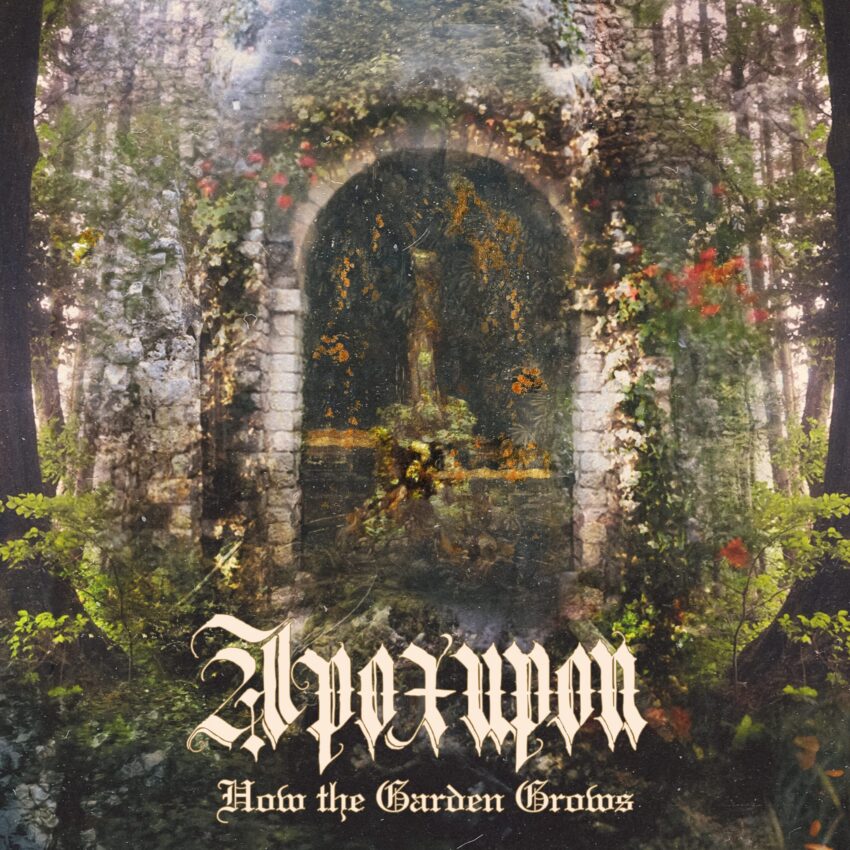
Part of my enjoyment for Apoxupon, the person behind it, and also most of the connected ventures is a sense of exploration and absolute openness for sound. How the Garden Grows (2019), the third record in the artist’s catalog, was a part of a silent wave of dungeon synth related music whose releases moved beyond the dark dungeon aesthetic and presented fantasy but away from the castle and its dark corridors. “Forest synth,” “pastoral synth,” “idyllic synth,” and other names sometimes used as descriptors all explored the realm of imagination in expanded palettes and pageantry. How the Garden Grows at the time fit within the realms of dungeon synth but was more akin to science fiction imagining a world whose flora had overtaken the current sapient species to live in what the Bandcamp describes as “post-anthropocene.” The sound of the record was unmistakable in its bedroom aesthetics but there was a sense of transcendence when it came to the experience which felt like a dream upon listening. Above all else, How the Garden Grows walked a path without guidance or expectation in a genre known for its freedom — feeling like an outsider in a genre of outsiders.
In 2026 we are given the hindsight of what would follow 2019. The global pandemic saw many displaced creatives at home discovering internet based microgenres such as dungeon synth. In 2019, How the Garden Grows was just a quasi dungeon synth record no one really questioned since its communities were progressive and inclusive in what they considered a part of the genre. Within the last 7 years of its release however, we can see Apoxupon and other contemporaries at the time expanded the borders of traditional fantasy dungeon synth and redrawing boundaries which would influence the subsequent boom of projects. These records would resonate with creative individuals who were sequestered at home and who connected with dungeon synth for its possibilities even more than its motifs. This wasn’t just D&D music made for game night, rather an entire cottage industry of imagination that had little to no requirements or prerequisites for participation. The software sounds of How The Garden Grows bridged things like dungeon synth, folk music, and new age into a sound which was far beyond even our own understanding of the microgenre.
Apoxupon: The first 3 albums, Impermanence Throne (2014), Revived (2016), and finally How the Garden Grows (2019), formed an arc joined together more by their themes and what music represented in my life at the times of their releases than their musical styles. Impermanence Throne was a primitive dark ambient album I made when I was still becoming familiar with making music without guitars or beats; it was about death, lives unfulfilled, not very happy stuff. Very few people were aware of my music at this time; I had a small tape release on a local label but very little attention from anywhere else, and I was generally not all that hopeful about getting very far with music when I made this album. Revived came when I was more comfortable with production but starting to focus more on composition, it is not quite all the way to being dungeon or fantasy synth but contains a lot of the melodic stylings that would form my later -synth works; I guess you could call it new age or a very melodic ambient. I did not have any strong thematic ideas in mind while writing this album, it was more about certain musical phrases and trying for particular sounds and atmospheres. Despite not much having changed in terms of anyone knowing about this project, the music on Revived felt a lot more hopeful so I poked fun at how negative the previous album had been. Impermanence had a track called “Dirge for a Dying Boy,” and that is how I felt in 2014, so this one had to “Revived,” I guess I wasn’t dead already yet after all. I was reading a lot of Camus and trying to embrace absurdism and making unclassifiable, obscure music for no other reason than the hell of it felt rejuvenating. Then Garden Grows a few years later was supposed to represent, well, growth, after the rejuvenation. It’s still not quite a full dungeon or fantasy synth album, but now there are sections with that being the definite descriptor.
I don’t think any of those first 3 albums are truly dungeon synth albums. There are some other tags that have floated around over the years — nature synth; forest synth; sylvan synth — that I think do a better job of describing the sound on Garden Grows and some other Apoxupon releases, but dungeon synth has always been an influence, since the very first release of Impermanence Throne in 2014. At that time, I knew of Mortiis, Neptune Towers, and countless dark ambient, dark folk, new age, and videogame soundtracks that influenced many other DS artists, but I didn’t know the term ‘dungeon synth’ yet. By the time I made Revived in 2016, I was definitely familiar with the term, understood it as a small, niche genre on bandcamp, and was influenced to some degree by a few early artists, mostly Sequestered Keep and Faery Ring. By 2019, I had bought a bunch of tapes and was very familiar with the genre as it was at that time; it was a distinct influence on Garden Grows, although my intention was to use that influence to make something that did not quite stay within the bounds of the genre. The live set that I HAD been performing as Apoxupon, up until I’ve created a new Garden Grows set to play this year, was more dungeon synth than those 3 albums, as it featured songs from later albums that were more intentionally DS. That I don’t think anything else should be changed about the shows I played that original set and will now be playing the new Garden Grows set — not the types of acts that I play with, not the venues I play at, not the way I promote the shows — tells you about what dungeon synth means to me.
I think there is music that is more in line with a ‘traditional’ dungeon synth sound and aesthetic, but that those acts can dress up like knights and play at the same show as someone in a wizard hat playing folk violin and someone else playing basically synthwave in a heavy metal battlejacket, and all of that can be promoted as a ‘dungeon synth show’ to make it easier for the kinds of weirdos who would be into any of that to know that’s what’s going on there haha. I’m not a purist at all and generally the way I use the term is more about a vibe and a shared intention rather than the specific musical stylings used to get there. Although yes another conversation can be had about what is dungeon synth and what is fantasy synth, forest synth, neoclassical new age, dark ambient, etc. and I am aware that much of what I would happily bring under the dungeon synth umbrella isn’t squarely in the ‘dungeon synth’ musical style.
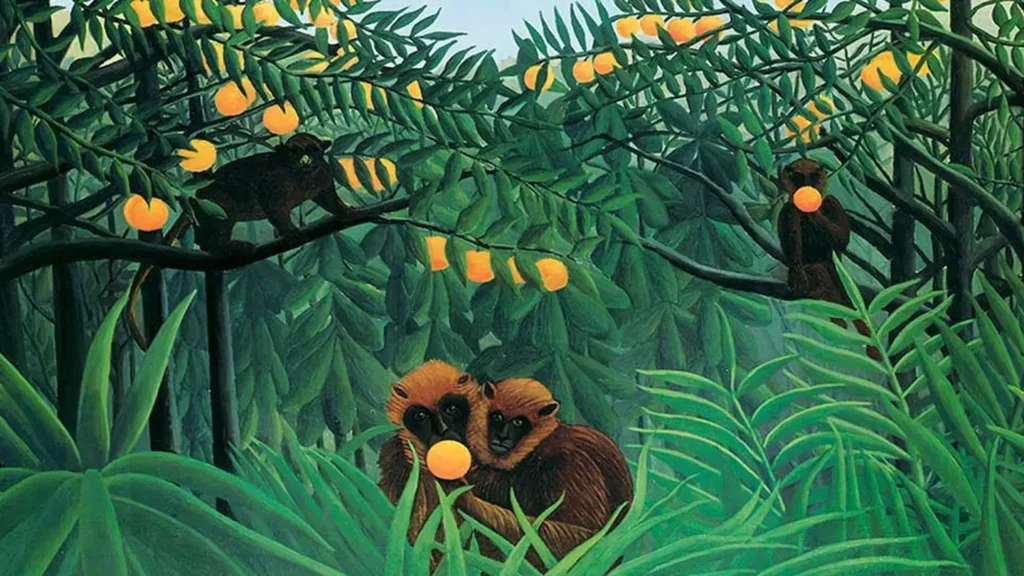
At the Florida Dungeon Fest, I was talking to Shawn from Realm and Ritual about this rerelease. When I first heard about it I think I went into a long spiel about the original cover art and its possible implications before being greeted with a momentary pause and then “yeah so there will be new art.” Part of my reason for being so attached to the concept of art is my history with art history and being entranced by the work of Henri Rousseau. One could make parallels between the French post-Impressionist painter, and his creation of surreal landscapes, with the process of dungeon synth crafting worlds out of bedroom instruments. Both seem to rely on imagination not shying away from a naive process to making art. Henri Rousseau would use houseplants to construct vast dreamlike landscapes growing them to impossible sizes and resulting is something known but warped. Rousseau is often cited as figure among the “naive art” or “outsider art” a contested distinction among artists to their proximity of formal training. Naive art is often used to describe dungeon synth with even Andrew Werdna, creator of the term dungeon synth, using the term “Naive Magic” to describe his fascination with the sound. Naive Art could most certainly be used to describe at home instruments to create fantasy soundscapes often without any sort of background in ambient music. This is of course an observation from 2026 and something at the time which was probably less important than the functional decision to use a royalty free image from a century’s old artist for album art.
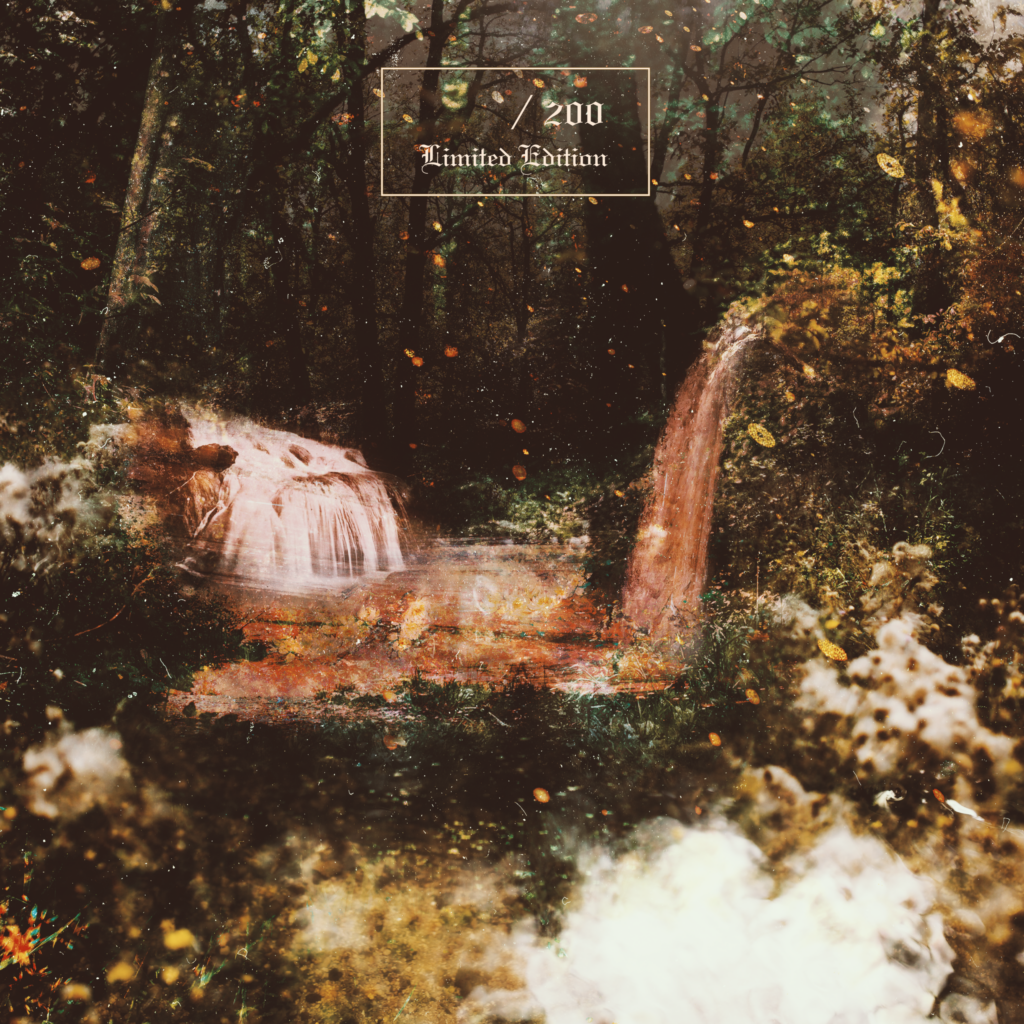
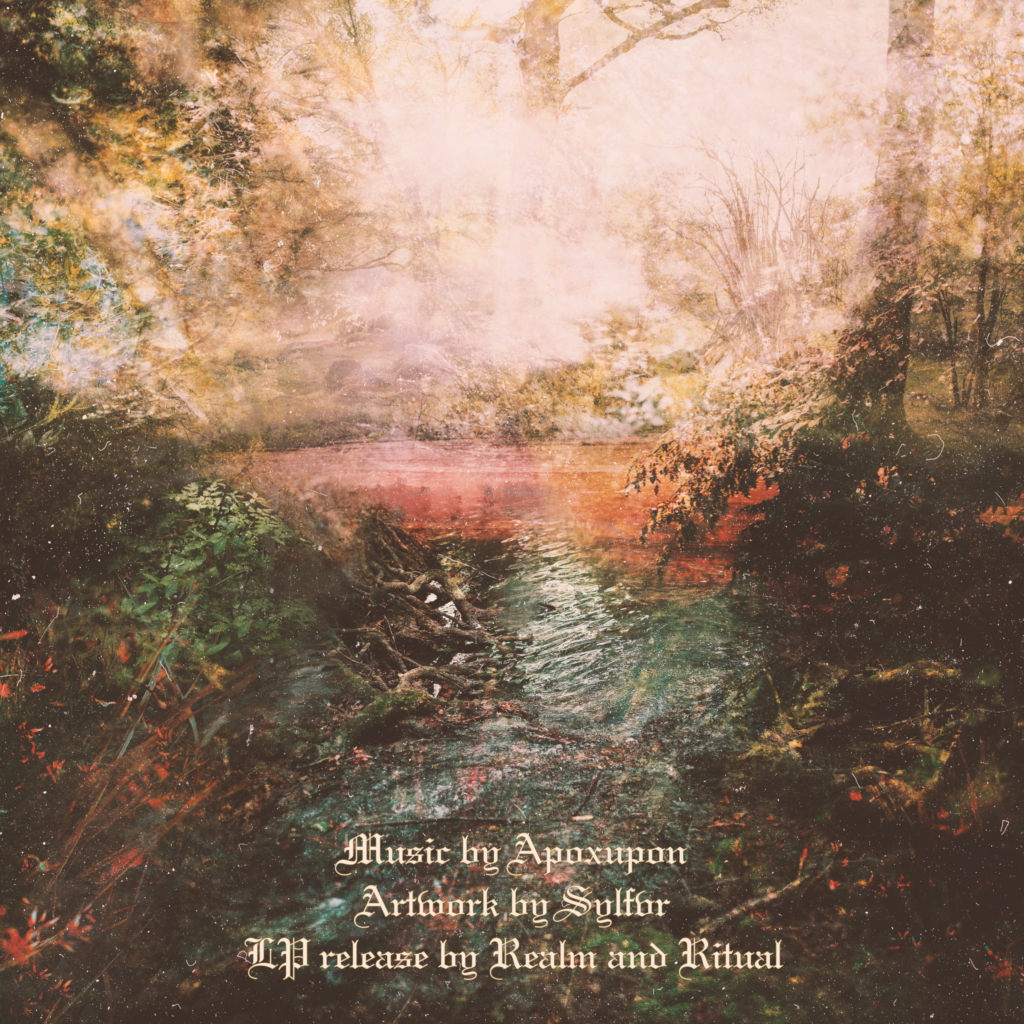
I chose the Rousseau painting because I thought the look of that painting, not necessarily what the content implied but just the WAY the plants and forest looked, captured the feeling of the music. I figured it’d just work well. And I think it did, and was fine for tape releases that already have an implicit DIY nature. But for the vinyl release, I really wanted original artwork. There are like ska and trance albums that use the same Rousseau painting, and it would feel strange to have that shared art printed on a whole vinyl record jacket haha, let alone my first (and perhaps only) vinyl release. It also always bothered me that the person was featured prominently in the Rousseau artwork, as the album was supposed to be about ‘after humans are gone.’ I became aware of Sylfvr’s art a couple years ago and knew pretty much right away he was who I would contact if I ever decided to have original artwork made for Garden Grows. I wanted something that was heavily nature-focused, not overtly fantasy but still seeming to be from some other realm. I also wanted something different than the typical illustration or painting styles used for DS, since this album was always supposed to be a little different from typical DS. Sylfvr’s digital collage style was perfect for achieving this.
Sylfvr is a French artist who in addition to numerous projects also does digital collage. Looking through the website one is greeted by an array of landscapes which look out of time and space and swirling in a dreamlike haze for eternity. The pastiche of elements to construct a fictional narrative is not unlike Rousseau and the other naive artists of history. Slyfvr’s education and art background being limited to “a half a year of photo school” almost hilariously could qualify as a naive artist though I feel academic and naive art might be different in 2026 than in 1907. What Sylfvr lacks in official academic training is supplemented with a hypnotic approach to making art as well as a connection with the musical community they have chosen to spend their time. In 2026, this artist seems to be doing well finding not only a style but a niche audience receptive to art.
SYLFVR: Anthony contacted me at the beginning of 2025 with the project to commission a new cover for How the Garden Grows, which I did not know at the time but ended up liking a whole lot and it felt like a really nice fit with my own art. The whole album feels like entering a portal to a green world and having a strong visual connection with music is the basis of how I work. The cover in itself went through a lot of iterations with always keeping it very nature-centered. Initially the gate featured a picture of myself that I tried to fashion like a satyr but I wasn’t satisfied with it so ended up going for the full ruins look. As always with my work it’s pretty much myself doing digital collages of my own stuff, although it always look a bit more like photobashing and photomanipulation, but really my technique is “let’s slap part of pictures I took together and see what sticks”. For example that gate doesn’t exist in that form in the real world, it’s just the inner structure, the wall on both side is something I added afterwards. It’s always (mostly) my own photos in there. I’m not too fond of hunting for the perfect spot in the real world so I just end up creating my own worlds.And I guess if you look very closely you can see the seams (though I try to hide them), but it’s part of how I work, I’m less concerned about details and more about the overall look of my art. One thing I like to do is to work at very small scales (I just dezoom like a madman) because I prefer the overall look rather than the finer details. I initially did the whole back/front cover as a continuous piece so the tree on the right does continue on the back. Anthony initially just told me he wanted 4 panels, and I thought it would be cool to have a front and a back that could exist on their own but also could be nice to see together.
I have always admired artists who see their work not as static and infallible releases rather points where things can be revised. The world was a different time in 2019 and even though it has been under a decade, things from before the pandemic feel like they are from a different time. The use of Sylfvr’s art makes the most sense for this record in 2026 given the subtext of the music as well as the process in which the visual art works. Both entities, both the record and the art are constructing this fabrication of reality from a pastiche of elements within this reality. Both strive to explore the unknown with tools they have on hand. Both are pillars of a community in which they choose to continue exploring. I feel like I continue to be fascinated by this genre becasue it isnt just D&D music made for game nights rather a way for people to make and appreciate art outside of the traditional music industry. As dungeon synth moves through its history it is interesting to see what is updated as the genre is populated by people who never stop revising their worldviews or thought about the process of how a record grows.
There will be a lot of Apoxupon shows playing Garden Grows in its entirety in 2026. I will be on the west coast in May with Seregost; in the eastern half of the US in June with Flickers from the Fen; in the UK in July; and continuing to tour throughout the States after that. I plan to play this set in support of this vinyl release through the end of the year, and possibly for some select international shows next year, and then never play it again, to make the occasions more special. I will be recording many of these shows and am planning to do a real old school, big deal blowout live album containing the 6 tracks as performed live at a number of different venues and cities, as well as specially performed collaboration versions of the tracks that I’ll be playing at some select shows. So a double tape or CD type deal, with the main album and then the bonus disc/tape with the special collaborative versions. The plan is to release this live album in 2027, as well as a separate release of a live recording of the original Apoxupon live set that I was playing prior to this Garden Grows set, sort of the ‘Era 1’ live album. And then finally write some new material, the first I’ll have ever written specifically with the intention of being played live, which is funny considering how many live albums it’ll be following.
Influences Playlist
Something I enjoy doing is gathering up influences from artists around a certain release. While it is of course important to listen and talk about the record I feel also listening to the things which inspired the record gives insight to how it was created. Even if people are not interested in the taxonomy or musicology of a record. Enjoying a record and having the artist recommend you a list of other cool music is invaluable. What follows is a microcosm of dungeon synth as a whole with some obvious influences from the revival era but some far flung artists from the world of kosmische musik, jazz fusion, modern classical, neofolk, atmospheric black metal, industrial, post rock, and more than one media OST. They are presented alphabetically either as Bandcamp or Discogs links depending on their legacy status. Some of these were absolutely new to me and now I have a list of records to discover. What is important is that things labeled as dungeon synth rarely are apart of a vacuum and the network of weirdness which persists in microgenres comes from people with an obsession of new sounds.
Acheulean Forests – The Enchantment (2017)
Agalloch – The White EP (2008)
Amenra – Alive (2017)
Ben Frost – By the Throat (2009)
Fief – II (2016)
Gandalf – Echoes from Ancient Dreams (1995)
Herbie Hancock – Mr. Hands (1980)
Malfet – The Snaking Path (2018)
Matt Uelmen – Diablo OST (1996 – 2011)
Monastery – The Garden of Abandon (2019)
Nest – Hidden Stream (2003)
Michiru Yamane – Castlevania: Symphony of the Night (1997)
Paddy McAloon (of Prefab Sprout) – I Trawl the Megahertz (2003)
Perunwit – Perkunu Yra Dang I (1996)
Popol Vuh – Hosianna Mantra (1972)
Red Sparowes – At the Soundless Dawn (2005)
Sequestered Keep – Lost Halls (2015)
Summoning – Nightshade Forests (1997)
Tomohito Nishiura – Dark Cloud OST (2000)
Toshio Masuda – Mushishi OST (2006)
Ulver – Kveldssanger (1996)